




July 26, 2026
Do Acoustic Panels Really Reduce Noise? What NRC 0.80 Actually Means
Ask ten showrooms whether acoustic panels work and you will get ten confident answers, most of them wrong. So let us settle the question properly. Do acoustic panels reduce noise? Yes, but only one kind of noise — and understanding which kind will save you a great deal of money and disappointment.
বাংলাদেশের ফ্ল্যাটগুলোতে টাইলসের মেঝে, কংক্রিটের দেয়াল আর কাচের জানালা — তিনটাই শব্দ ফিরিয়ে দেয়। ফলে ঘরে কথা বললে প্রতিধ্বনি হয়, টিভির শব্দ ঘোলাটে শোনায়, আর ভিডিও কলে ওপাশের মানুষ বলে “তোমার আওয়াজ ফাঁকা ফাঁকা লাগছে”। এই সমস্যার সমাধানই অ্যাকুস্টিক প্যানেল।
The One Distinction That Matters: Absorption vs Insulation
Almost every complaint about acoustic panels comes from confusing two completely different jobs. Therefore it is worth being blunt about the difference before anything else.
Sound absorption deals with noise that is already inside your room. When you speak, sound waves travel outward, hit hard surfaces, and bounce back. Consequently you hear the same sound twice, slightly delayed. That smearing is echo, or more precisely reverberation. Absorption panels soak up those reflections, so speech becomes clearer and the room feels calmer.
Sound insulation, on the other hand, is about stopping noise from crossing a wall. In other words, it keeps your neighbour’s television out of your bedroom. Insulation needs mass, density and airtight construction — think double drywall, rockwool infill and sealed gaps.
সহজ ভাষায়: শোষণ ঘরের ভেতরের শব্দ ঠিক করে, আর ইনসুলেশন বাইরের শব্দ আটকায়। দেয়ালে অ্যাকুস্টিক প্যানেল লাগালে ঘরের প্রতিধ্বনি কমবে, কিন্তু পাশের ফ্ল্যাটের আওয়াজ বন্ধ হবে না। যে দোকান বলে “এটা লাগালে বাইরের কোনো শব্দ ঢুকবে না”, সে ভুল বলছে। 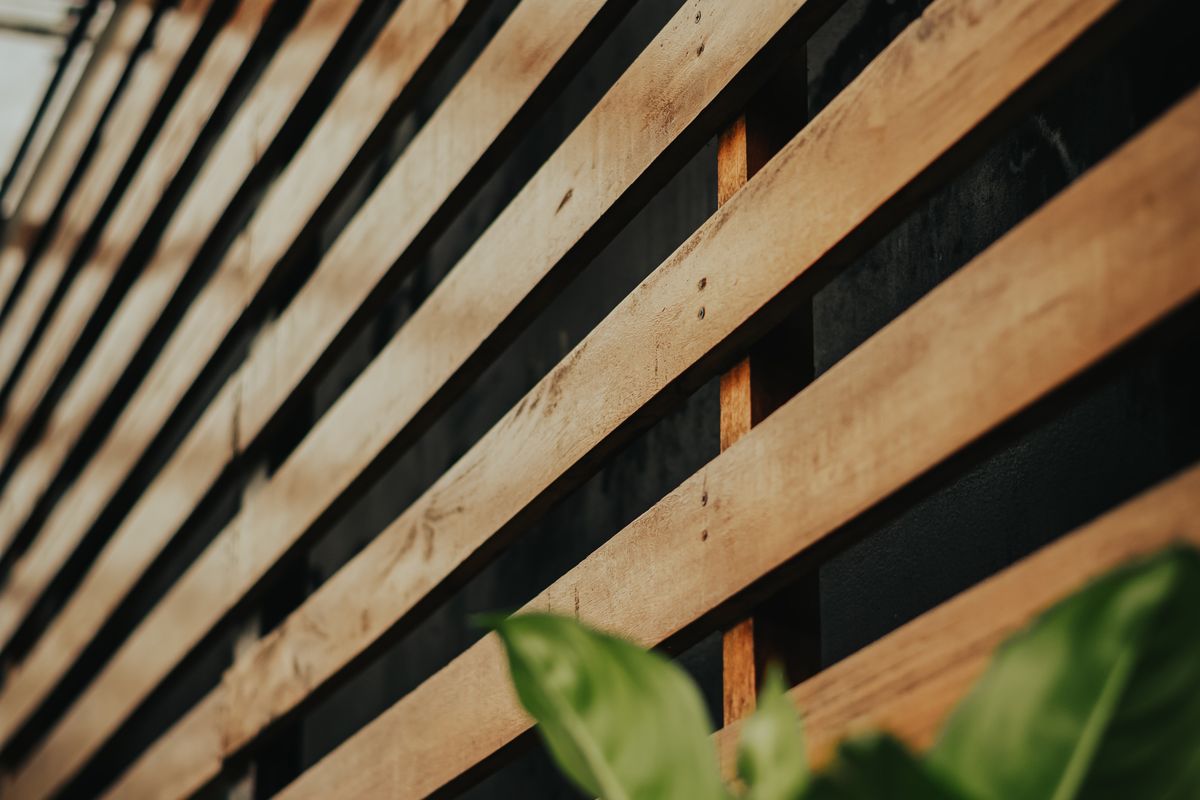
What NRC Actually Measures
NRC stands for Noise Reduction Coefficient. Despite the name, it does not measure how much noise a panel blocks. Instead it measures how much sound energy the surface absorbs rather than reflects, on a scale from 0 to 1. The measurement follows the ASTM C423 standard, so figures from different laboratories stay comparable.
- NRC 0.00 — a perfect mirror for sound, since everything bounces back
- NRC 0.05 — a bare plastered wall, painted concrete or glass
- NRC 0.30 — a heavy curtain or a thick rug
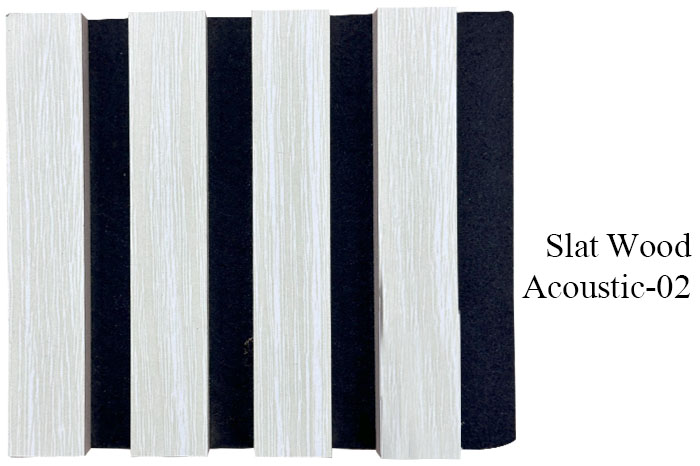
- NRC 0.80 — a proper wood slat panel on acoustic felt backing
- NRC 1.00 — theoretically perfect absorption, so nothing returns at all
An NRC 0.80 panel therefore absorbs roughly 80% of the sound energy that reaches it and reflects only 20% back into the room. Compare that with the 0.05 of a painted wall and the difference stops sounding like marketing. একটা কথা মনে রাখা জরুরি — NRC কোনো ব্র্যান্ডের দাবি নয়, এটি ল্যাবরেটরিতে মাপা সংখ্যা। বিক্রেতার কাছে SGS বা সমমানের টেস্ট রিপোর্ট চেয়ে নিন। রিপোর্ট দেখাতে না পারলে ধরে নিন সংখ্যাটা বানানো।
Why the Gaps Do the Work, Not the Wood
Here is the part most buyers get backwards. The timber slats are not what absorbs sound. Wood is hard and reflective, so on its own it behaves much like a wall.
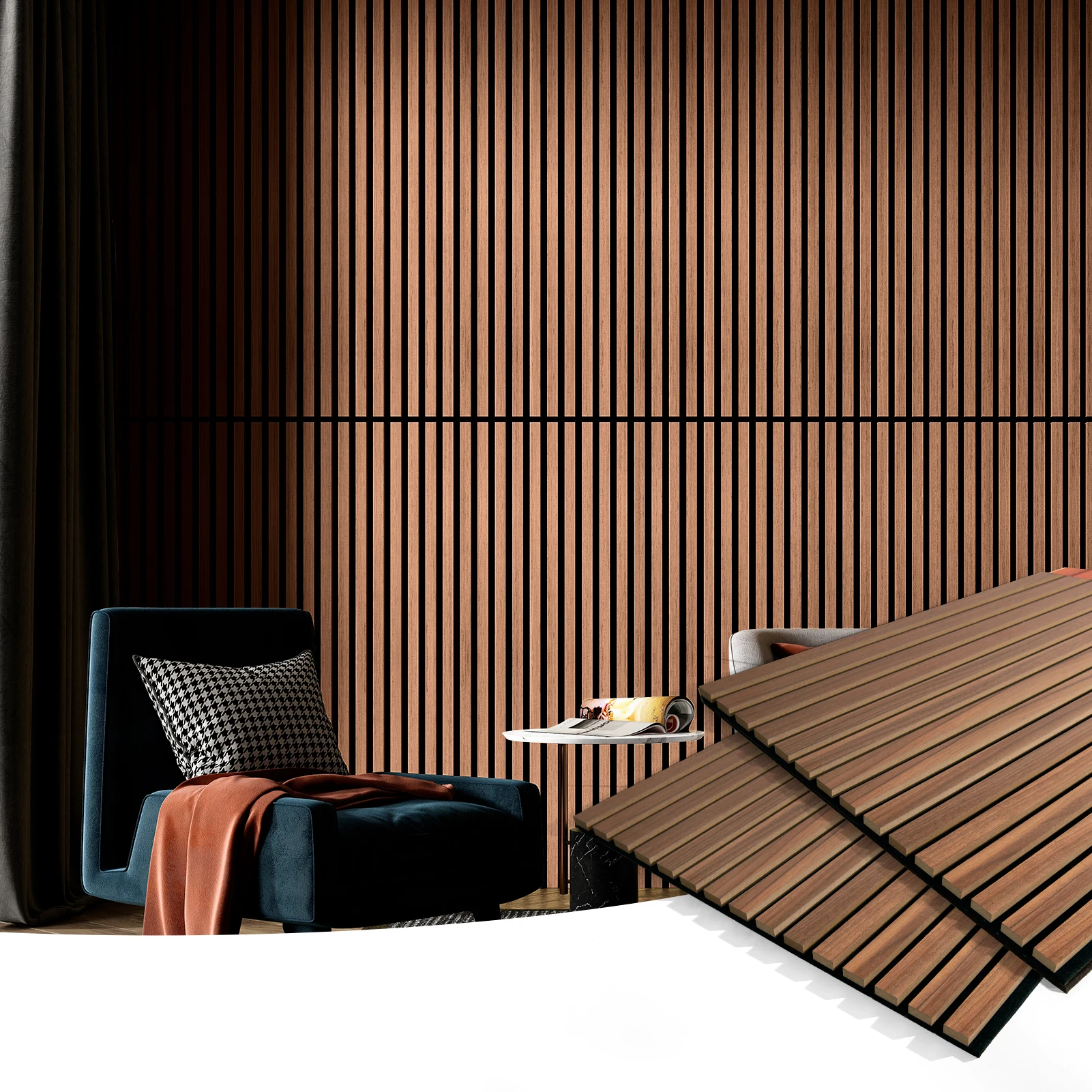
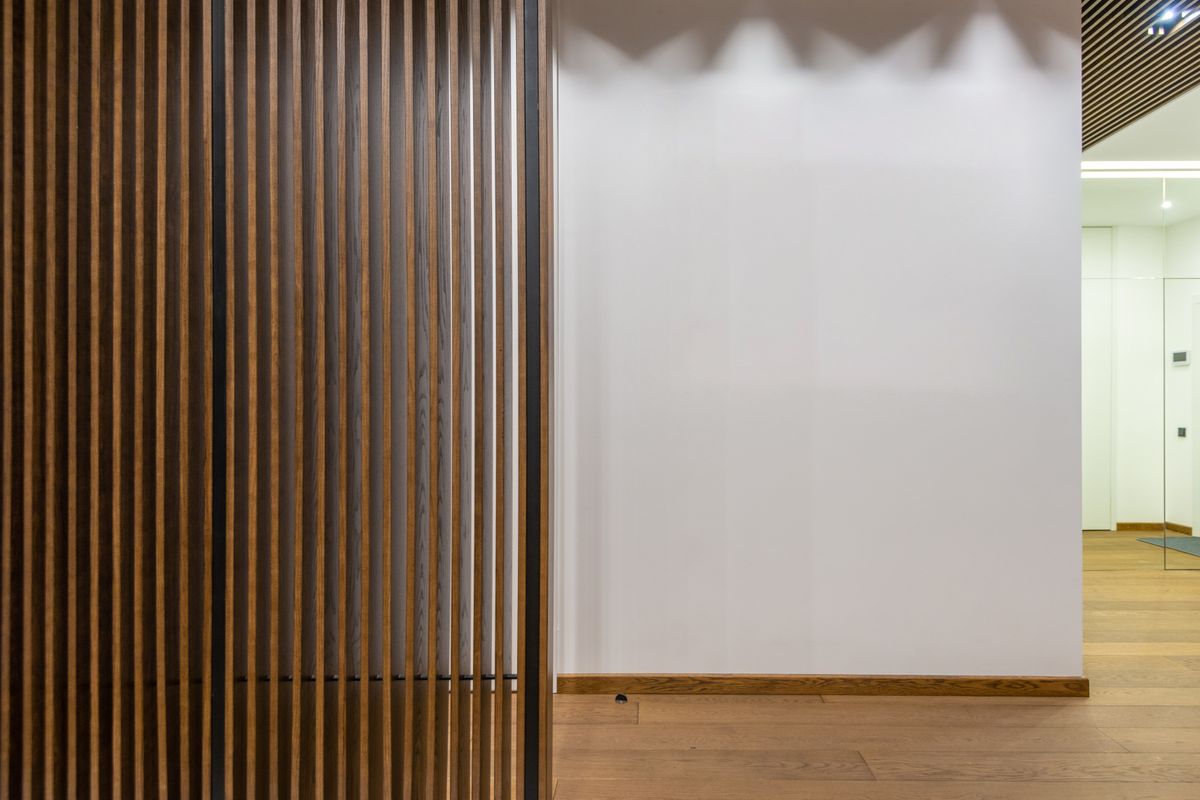
The absorption happens in the black polyester felt behind the slats. Sound waves pass through the gaps between the slats, enter the fibrous felt, and lose energy to friction as they push through the fibres. Meanwhile the slats do two useful things: they scatter the remaining reflections in different directions, and they look considerably better than bare felt.
এই কারণেই “স্ল্যাট প্যানেল” নামে বিক্রি হওয়া সব প্যানেল কাজ করে না। অনেক সস্তা প্যানেলের পেছনে পাতলা কাগজ বা শক্ত ফোম থাকে — দেখতে একই, কিন্তু শব্দে কোনো পার্থক্য হয় না। কেনার আগে পেছনের ফেল্টটা হাতে ধরে দেখুন: মোটা, ঘন ও নমনীয় হতে হবে।
Where Do Acoustic Panels Reduce Noise Best?
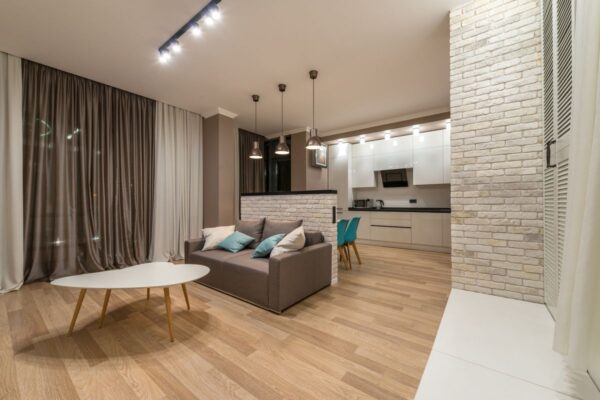
Acoustic panels reduce noise most noticeably in rooms that are hard, empty and rectangular. Consequently the same panel can feel transformative in one room and pointless in another.
Home offices and video calls
This is where most people notice it first. Your microphone picks up both your voice and its reflections, so callers hear that hollow, distant quality. One treated wall behind or beside the desk usually fixes it. 
Living and dining rooms
Tiled floors plus large glass windows create long reverberation. As a result, conversation across a sofa becomes tiring and television dialogue turns muddy. টিভির পেছনের দেয়ালে প্যানেল লাগালে সংলাপ অনেক পরিষ্কার শোনা যায়। 
Studios, podcast rooms and gaming setups
Here absorption is not decoration but equipment. Recording in an untreated room bakes the room sound into every take, and no plugin removes it cleanly afterwards.
Restaurants, cafés and offices
When a room gets loud, people raise their voices, which makes it louder still. Absorption breaks that cycle. Ceilings work especially well in these spaces, since sound rises and there is rarely furniture overhead to interrupt it.
Where Acoustic Panels Do Not Reduce Noise
Being honest about limits is better business than a refund. Accordingly, here is where absorption panels will not help.
- Neighbour noise through a shared wall — you need insulation, not absorption
- Traffic noise through windows — glazing and seals are the problem, so panels change nothing
- Footsteps from the flat above — that is impact noise travelling through the structure
- A room already full of soft furnishings — carpets, curtains and sofas already absorb a lot, therefore the improvement will be modest
How Much Coverage Do Acoustic Panels Need to Reduce Noise?
You do not need to cover every wall, and you should not. Over-absorbing leaves a room sounding dead and uncomfortable.
For a normal room, treating 15% to 25% of the total wall area gives a clear improvement while keeping the space lively. Above all, place panels on the first surfaces sound hits: the wall behind you, the wall opposite, and the ceiling if you can.
একটা সহজ হিসাব: প্যানেল ৯৪.৫ x ১২.৬ ইঞ্চি মাপের হলে প্রতিটি প্রায় ৮.৩ বর্গফুট ঢাকে। ১২ ফুট চওড়া একটা দেয়াল পুরো ঢাকতে প্রায় ১১-১২টি প্যানেল লাগবে। শুরু করার জন্য একটা দেয়ালই যথেষ্ট — পরে দরকার হলে আরও বাড়ানো যায়।
Two parallel bare walls facing each other cause flutter echo, that quick metallic ring you hear when you clap. Treating just one of the two surfaces removes it, so you rarely need both.
Before You Buy: Will These Acoustic Panels Reduce Noise?
- Ask for the test report — an NRC figure without SGS or equivalent backing is just a number in a brochure
- Feel the backing — dense polyester felt absorbs, whereas thin card or rigid foam does not
- Check the fire rating — Grade A matters in offices, restaurants and any public space
- Confirm panel height — a full floor-to-ceiling panel avoids an ugly horizontal joint
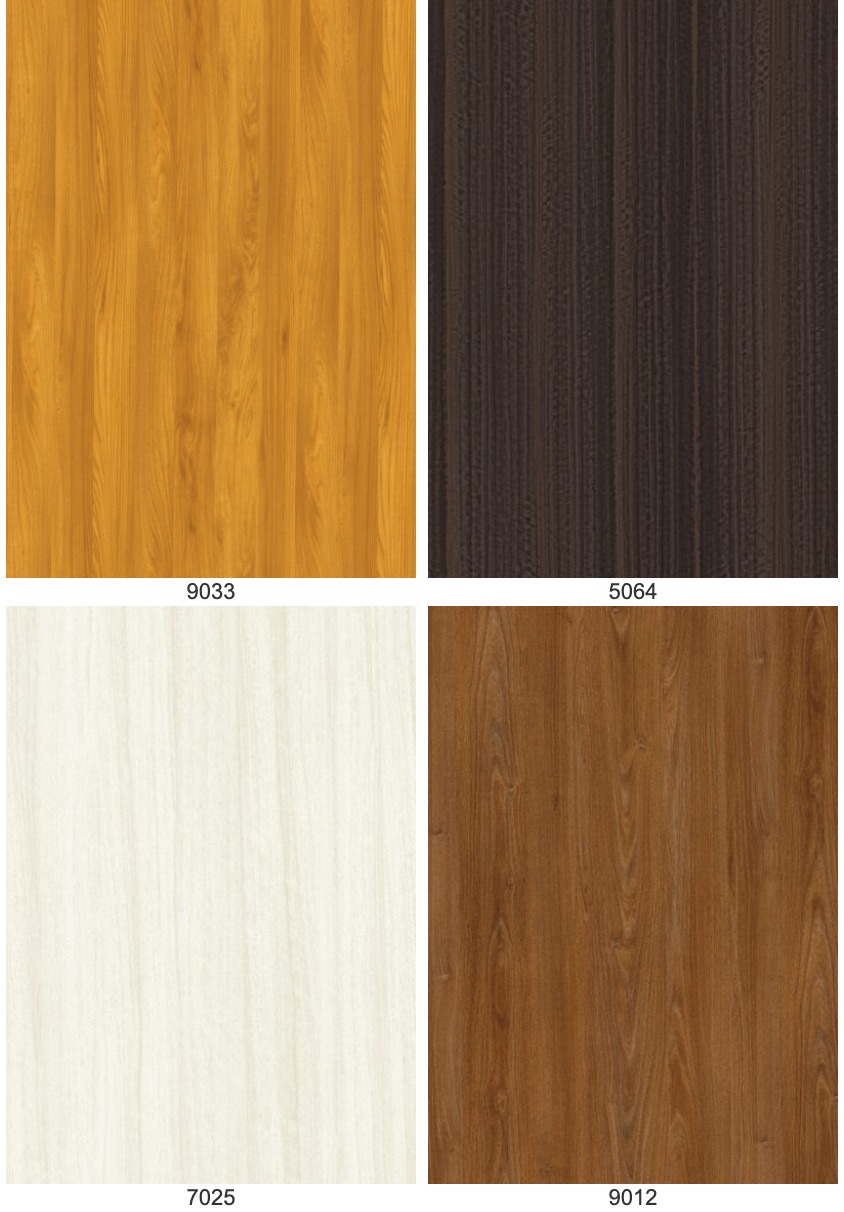
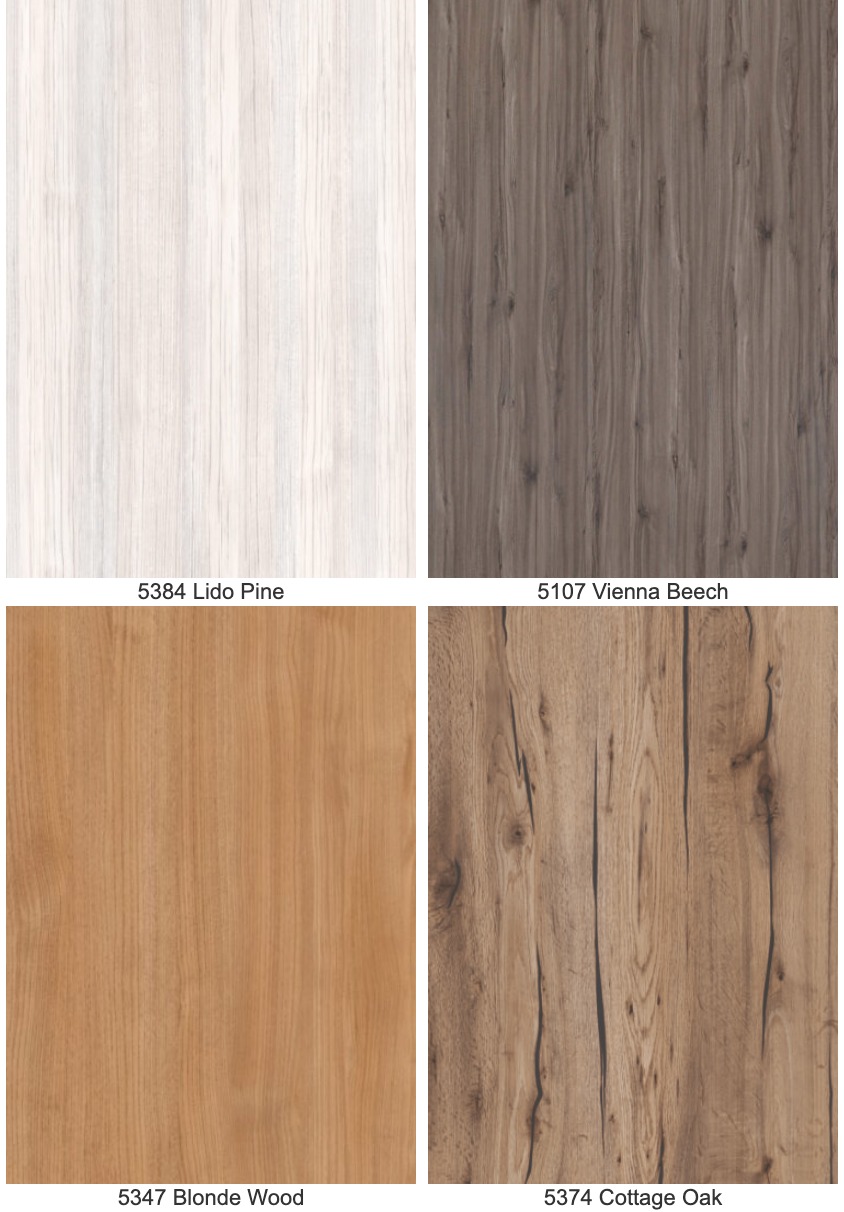
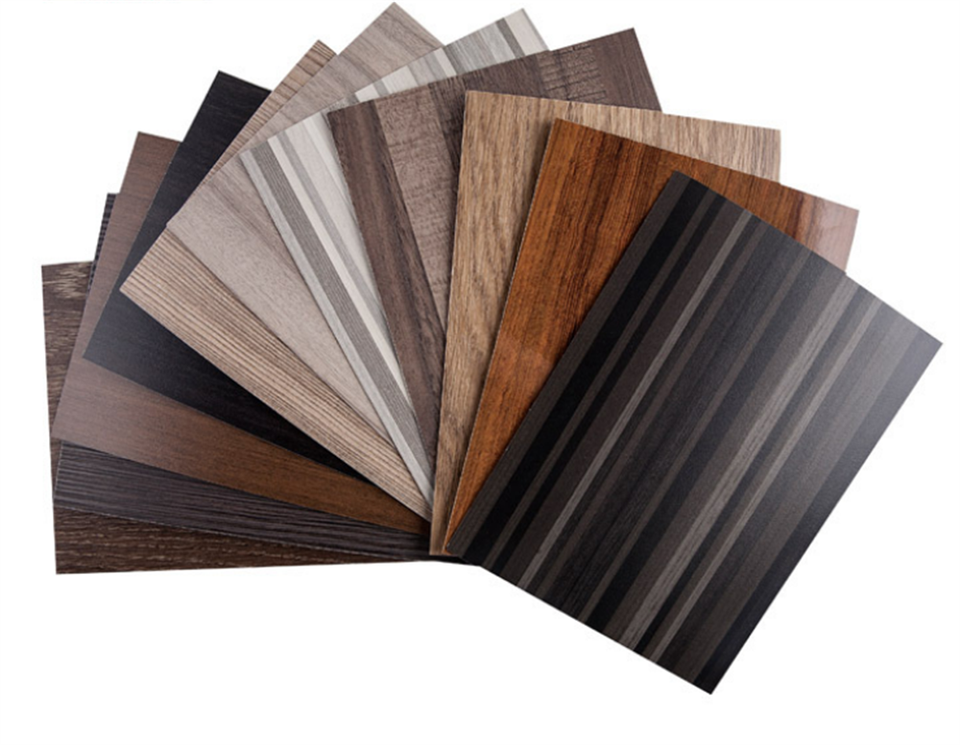
- See a physical sample — since wood finishes photograph very differently from how they look on a wall
So, do acoustic panels reduce noise? Acoustic panels reduce noise that your own room creates, measurably and immediately. They will not turn your flat into a soundproof studio, and any seller who promises that is selling you the wrong product.
দেখে নিন, তারপর সিদ্ধান্ত নিন
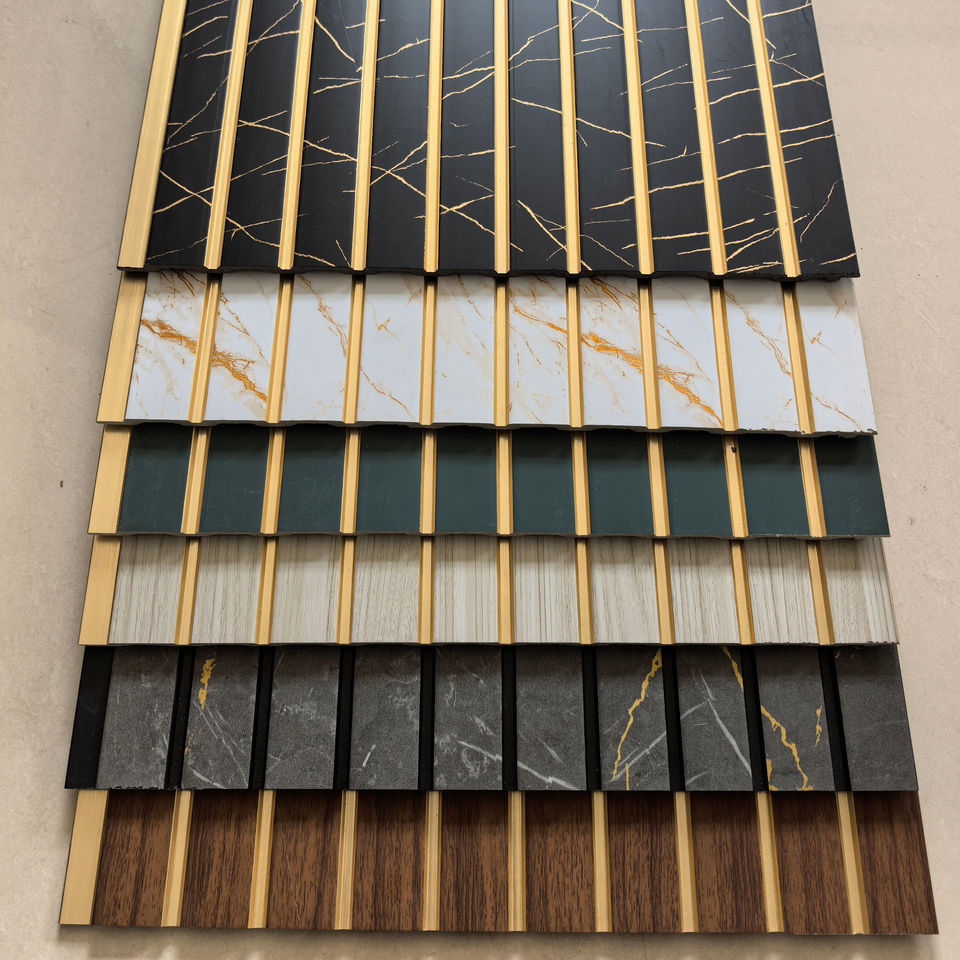
আমাদের অ্যাকুস্টিক উড স্ল্যাট প্যানেল SGS টেস্টে NRC 0.80 রেটিং পেয়েছে, ফায়ারপ্রুফ গ্রেড A, এবং ছয়টি কাঠের ফিনিশে পাওয়া যায়। ঢাকার শোরুমে সব ফিনিশের ফিজিক্যাল স্যাম্পল আছে — হাতে নিয়ে ফেল্টের ঘনত্ব দেখে তারপর সিদ্ধান্ত নিতে পারবেন। শুধু সাজসজ্জার জন্য প্যানেল খুঁজলে আমাদের PS ফ্লুটেড ওয়াল প্যানেল দেখতে পারেন, অথবা পুরো Wall Panel কালেকশন ঘুরে দেখুন। কোন ঘরে কয়টা প্যানেল লাগবে জানতে চাইলে ঘরের মাপ জানিয়ে যোগাযোগ করুন — আমরা হিসাব করে দেব।